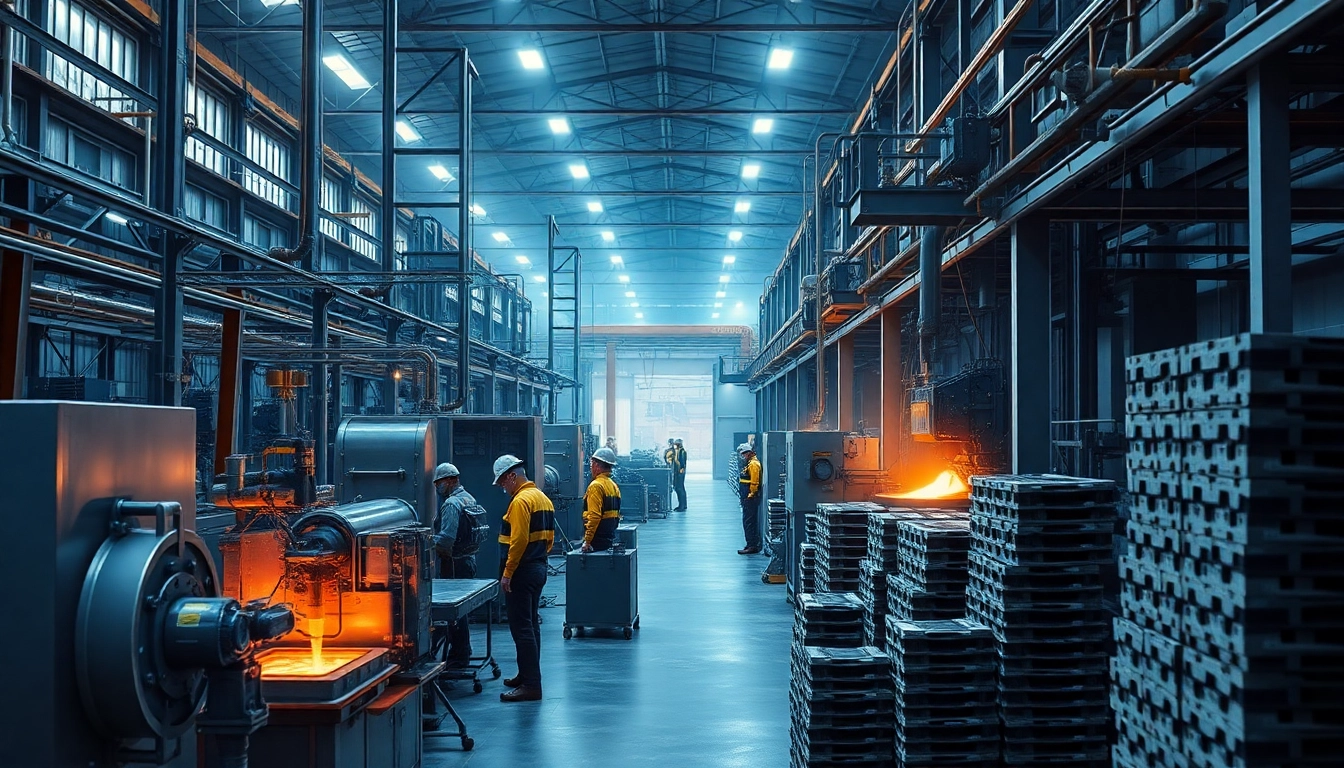
Understanding High Pressure Diecasting in Malaysia
High pressure diecasting is a critical manufacturing process in Malaysia’s industrial landscape, known for its efficiency and precision. This method is not only pivotal in various sectors but also exemplifies Malaysia’s commitment to innovation and quality in production. The technique involves injecting molten metal into a mold at high pressures, resulting in the creation of complex shapes with excellent surface finishes. As industries evolve, understanding the nuances of high pressure diecasting in Malaysia becomes essential for businesses aiming to stay competitive.
When exploring options, high pressure diecasting malaysia manufacturers offer comprehensive insights into state-of-the-art technologies and practices, positioning themselves as leaders in this domain.
Definition and Process of High Pressure Diecasting
High pressure diecasting is a manufacturing process that involves forcing molten metal into reusable steel molds (or dies) under high pressure. This process is ideal for producing large volumes of parts with complex geometries. The high pressure ensures that the molten metal fills all areas of the mold, resulting in parts with excellent dimensional accuracy and surface finish. The primary metals used in high pressure diecasting include aluminum, zinc, and magnesium, each chosen for their specific properties and applications.
Historical Development of Diecasting in Malaysia
The diecasting industry in Malaysia has witnessed significant development, beginning in the late 1970s when local manufacturers started adopting this technology. Over the decades, the industry has matured, equipped with advanced machinery and skilled labor. Today, Malaysia stands as a competitive player in the global diecasting market, attracting investments from international companies due to its strategic location and favorable business environment. The historical evolution reflects a shift towards modernization and high-tech processes to meet global standards.
Advantages of High Pressure Diecasting Over Other Methods
- High Precision: Components produced have tight tolerances, which is critical in industries requiring high accuracy.
- Efficient Production: The process allows for high volume production, making it cost-effective for manufacturers.
- Excellent Surface Finish: The high-pressure process results in smoother surfaces, reducing the need for secondary machining.
- Material Efficiency: Minimal waste results from the efficient use of materials, leading to lower costs.
- Complex Shapes: Ability to produce intricate designs that are often impossible with other manufacturing methods.
Key Applications of High Pressure Diecasting in Various Industries
Automotive Industry: Enhancing Performance and Efficiency
The automotive sector is one of the largest consumers of high pressure diecasting in Malaysia. Components such as engine blocks, transmission cases, and structural parts are frequently produced using this process. The advantages of lightweight aluminum components lead to improved fuel efficiency and performance. As automotive technology advances towards electric and hybrid vehicles, the demand for lightweight and high-strength materials will only increase, presenting opportunities for diecasting manufacturers.
Electronics Manufacturing: Precision and Reliability
In the electronics industry, high pressure diecasting plays a crucial role in producing housings, connectors, and heat sinks that require not only precision but also excellent thermal conductivity. The ability to produce complex shapes with high dimensional accuracy meets the stringent standards of electronics manufacturing, ensuring reliability and long-term performance of electronic devices.
Aerospace Components: Meeting Stringent Standards
The aerospace sector demands unparalleled precision and reliability due to the safety-critical nature of its components. High pressure diecasting provides the necessary mechanical properties and surface finishes that meet stringent industry standards, allowing parts to endure extreme conditions. This has positioned Malaysia as a favorable location for manufacturers looking to enter the aerospace supply chain.
Navigating Challenges in High Pressure Diecasting Malaysia
Common Issues and Solutions in Diecasting Production
Despite its advantages, high pressure diecasting faces several challenges including defects like porosity, dimensional inaccuracies, and tooling wear. Addressing these issues demands strict quality control measures and investment in advanced technologies. Solutions might involve deploying automated inspection systems and adopting a proactive maintenance schedule for tooling to extend its life and enhance production efficiency.
Regulatory Compliance and Industry Standards
Compliance with both local and international standards is essential for manufacturers in the high pressure diecasting sector. The Malaysian government emphasizes adherence to quality standards outlined by organizations like ISO and ASTM. Manufacturers must stay updated on the regulatory landscape to ensure their processes and products meet all required certifications, which is crucial for maintaining competitive advantage in the global market.
Addressing Market Competitiveness and Innovation
The competitiveness within the diecasting industry is intense, driven by technological advancements and changing customer demands. Manufacturers need to invest in research and development to innovate new processes and materials that can enhance productivity and product quality. Collaborations with educational institutions for research can also drive innovation and create a skilled workforce equipped for future challenges.
Best Practices for High Pressure Diecasting Manufacturers
Implementing Efficient Quality Control Measures
Quality control is paramount in high pressure diecasting. Implementing rigorous testing protocols and utilizing advanced metrology equipment can help identify defects early in the production process. Regular audits and process evaluations contribute to maintaining high standards and ensuring customer satisfaction.
Investing in Advanced Diecasting Technologies
To keep pace with industry demands, manufacturers must invest in cutting-edge technologies such as automated diecasting machines and real-time monitoring systems. These advancements can significantly improve production efficiency and product quality, while also reducing operational costs.
Workforce Training and Safety Protocols
Continuous workforce training is vital in adapting to technological advancements in the diecasting industry. Safety protocols that ensure a safe working environment are also crucial. Training programs should focus on both technical skills and safety practices to mitigate workplace hazards and enhance productivity.
Future Trends in High Pressure Diecasting Malaysia 2025
Emerging Technologies in Diecasting Processes
The future of high pressure diecasting in Malaysia looks promising with the integration of Industry 4.0 technologies. Innovations such as artificial intelligence and machine learning can optimize production processes, reduce waste, and improve quality control. Adopting such technologies will be essential for manufacturers aiming to thrive in an increasingly competitive landscape.
Sustainability Practices and Environmental Impact
As global awareness of environmental issues rises, sustainable diecasting practices are becoming paramount. Manufacturers are now focusing on reducing their carbon footprint by adopting greener technologies, such as energy-efficient furnaces and recycling scrap materials. Sustainability will not only enhance corporate responsibility but also appeal to environmentally conscious customers.
Predictions for Market Growth and Opportunities
The diecasting market in Malaysia is poised for growth, driven by rising demand from the automotive, aerospace, and electronics sectors. Companies that capitalize on emerging technologies and sustainability practices will likely find significant opportunities in the coming years. Furthermore, tapping into new markets and enhancing international collaborations can unlock additional growth avenues for Malaysian diecasting manufacturers.